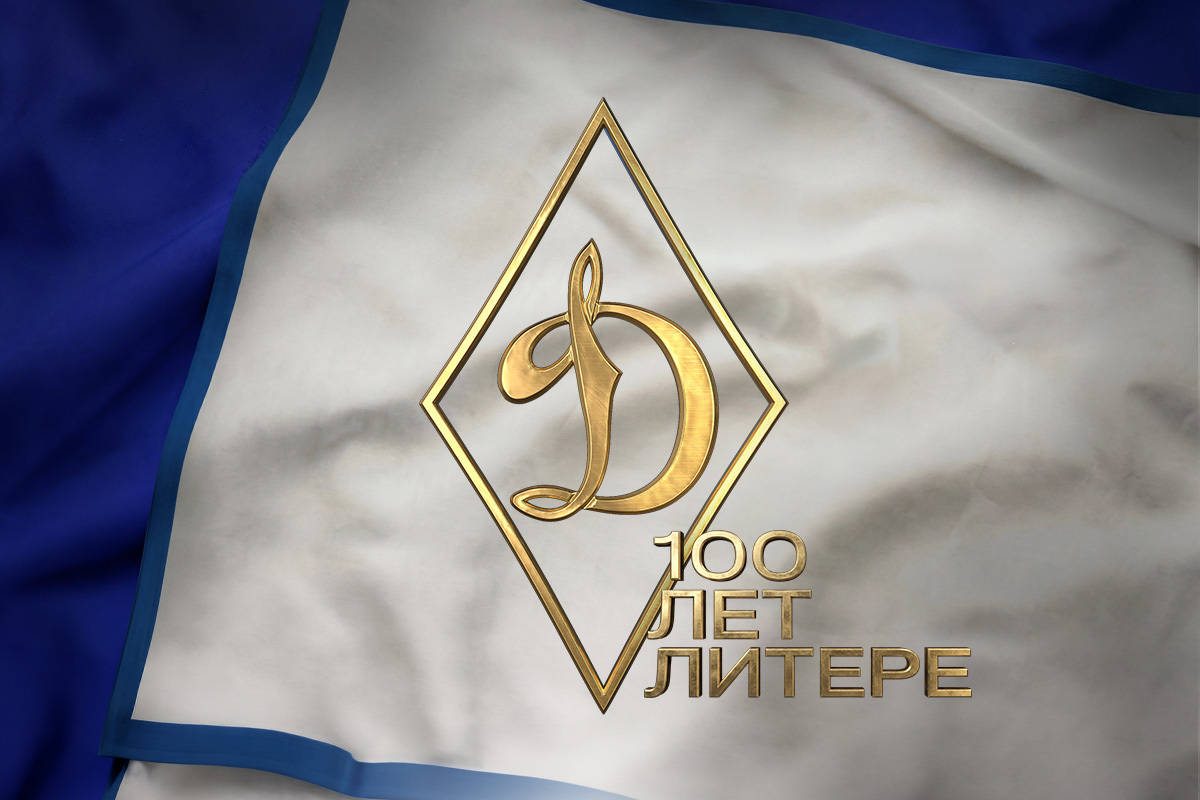
In 2026, we celebrate not only the 103rd anniversary of the founding of our football club, but also the centenary of our famous emblem - the proud letter "D", which invariably adorns the uniform of Dynamo.
Few people remember now that it wasn't created overnight. The first version of the emblem was proposed by Kirill Kuzmin and Pavel Uralets and emphasized the connections between the various sports developed by the Dynamo club. The diamond depicted various sporting elements: a rifle, a ski, a ski pole, a racket, a horseshoe, a ball, an oar, a chessboard, a foil, a weight, a propeller, and a gear. A red star with a hammer and sickle crowned the whole thing.
Creating such a badge required remarkable skill, so the rapidly developing club needed a simpler, more elegant logo. It was created by one of the team's players, Alexander Borisov, a very talented and versatile individual.
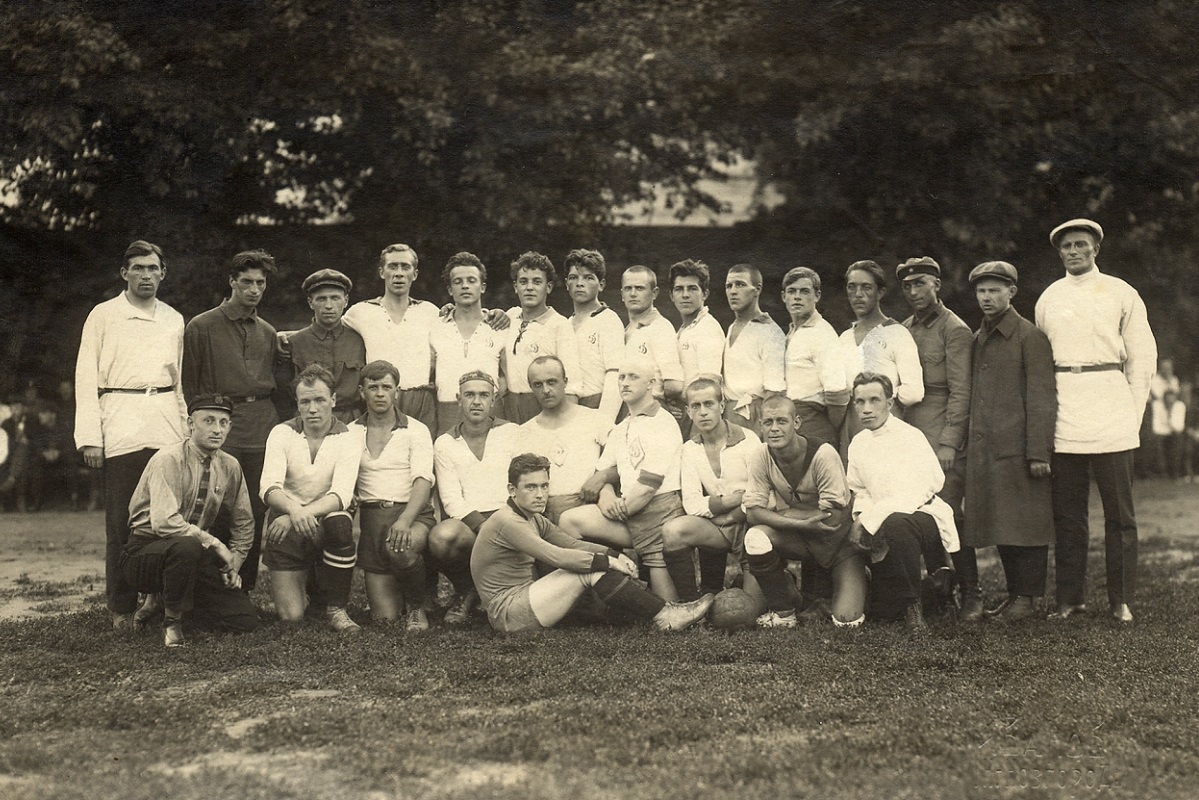
Alexander Borisov (fifth from the left in the top row)
Alexander Prokofievich was born in 1899 to a large family of farmers. He was passionate about sports from childhood, playing football in Malakhovka. In 1918, Borisov joined the Red Army upon the first call-up, and in 1920, he was sent to Moscow to train as a sports instructor. Three years later, he became the Moscow high jump champion, joined the Dynamo club, and made the first-ever squad of our football club.
"After demobilization, I was unemployed for a while and had no means of subsistence. Our football team learned of this, and at a regular meeting, it was decided to provide me with financial assistance. Having learned that I drew a little, they offered me a commission to paint a sign for a sporting goods store. I eagerly accepted the offer, painted the sign, and earned a small financial boost. The text on the sign was simple: everything for sport, everything for hunting. The Dynamo MPSO logo and the figure of a football player playing with a ball were prominently displayed in large letters. The colors of the player's uniform and the sign itself still match those of the Dynamo players and the entire club", as Borisov described the period in his letter.
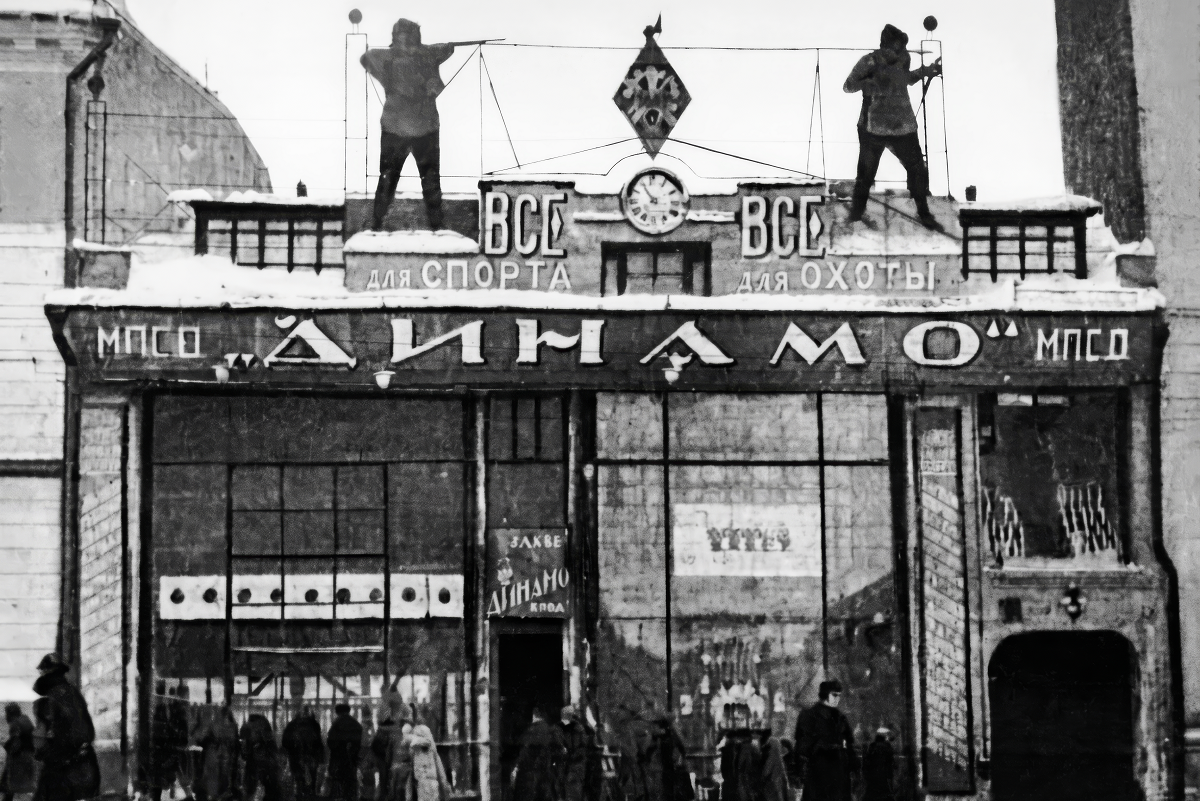
The dynamic right winger played in twenty matches for Dynamo, but he went down in our club's history as the creator of the legendary emblem, adopted in 1926—a white diamond enclosing the letter "D."
"When the question of creating a Dynamo emblem arose, I was tasked with it. I set to work eagerly. In the process of creating the emblem, I had to collect and study all the existing emblems of other Moscow sports clubs. Their images were mostly monograms and difficult to decipher, a kind of charade. To test my idea for a Dynamo emblem, I decided to remove a sign I had designed from a sports store," Borisov recalled.
The Dynamo club itself interpreted the emblem as follows: "It is elegant, it is youthful and fit, it is proud but not pompous, it is gracefully embellished but austere in its grace." It's perfect, especially with the chosen color scheme. The capital "D" itself isn't particularly striking. But there's a clever twist — the vertical element features a pennant-like protrusion. It adds a touch of originality to the emblem."
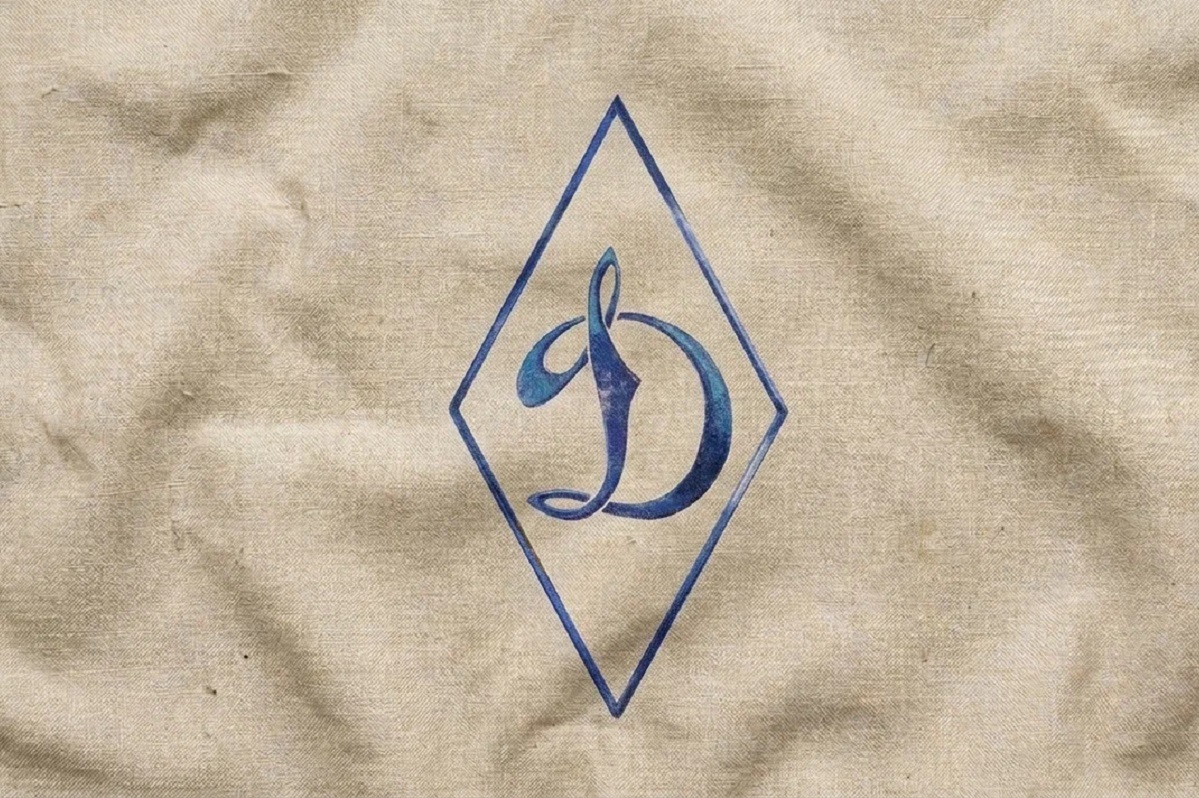
After this, Dynamo's management took notice of Borisov's artistic talent, and soon, on his recommendation, the young footballer enrolled in the Higher Art and Technical Institute, where he became a renowned architect, all the while maintaining his love for sport.
From the first days of the war, Borisov worked as part of a military construction organization to restore the national economy. He worked in Stalingrad, and from 1944 to 1966, he was directly involved in the rebuilding of the devastated Chisinau, designing large-scale projects. After retiring, Alexander Prokofievich returned to his native region and settled in Dubna, near Moscow, where he continued to design buildings on a voluntary basis.
As for his main brainchild—a diamond with the letter "D" inside—it existed in its original form for 13 years. In 1939, a red star was added to the diamond's upper corner in honor of the society's award of the USSR's highest award, the Order of Lenin.
In this classic form, the emblem survived until the collapse of the Soviet Union, when the red star disappeared and the letter "D" itself was redesigned. At the start of the Russian stage, it was in constant flux—it featured a ball, the word "Moscow," the club's founding year, and even a resemblance to the Kremlin walls.

In 2013, the Russian Football Union allowed clubs to add stars to their emblems for winning five national championships. Then, our emblem was adorned with two gold stars in honor of Dynamo's 11 championship titles.
The most recent rebranding took place in 2020, when the only official emblem of FC Dynamo was restored to a more elegant letter "D" with two gold stars above it and without the diamond.
Today, this emblem is familiar to every Russian, as it has been celebrated by numerous outstanding Dynamo athletes. And for millions of fans, this simple and familiar letter "D" has forever taken root in the hearts of fans.