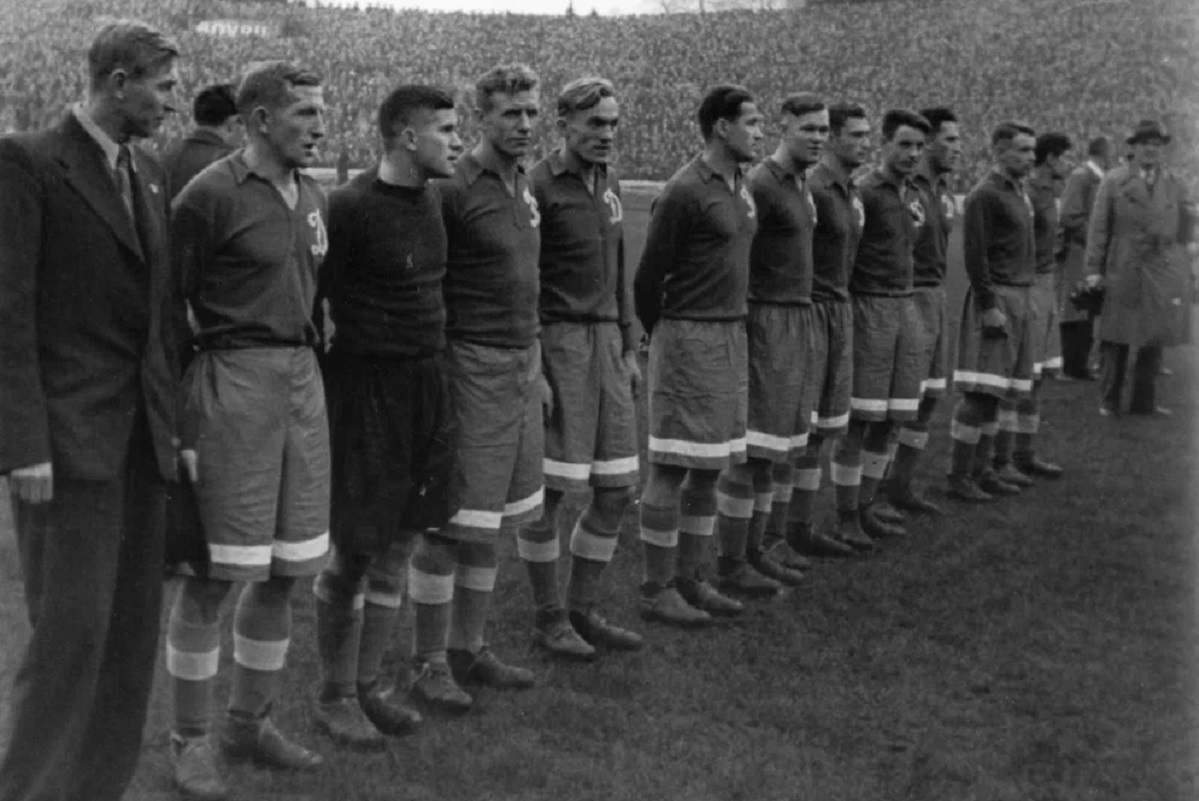
Exactly 80 years ago, on November 13, 1945, Dynamo Moscow hosted the first match of the famous British tour – in London against Chelsea. We recall the main characters of the British journey and immerse ourselves in the atmosphere surrounding it.
On September 23, 1945, the first post-war USSR Football Championship concluded, with Dynamo Moscow emerging victorious. The White-Blues finished one point ahead of the Moscow army team, but CDKA redeemed itself in the USSR Cup, defeating Dynamo in the final.
Immediately after the Cup final, the White-Blues' senior coach, Mikhail Yakushin, was summoned to the Kremlin, where he was informed of a proposal from the Football Association of England to organize a match between English and Soviet football players. Dynamo was no accident – the English team wanted to play the best Soviet team, and Dynamo had just won the championship. Kliment Voroshilov, Deputy Chairman of the Council of Ministers of the USSR, who oversaw Soviet sports, directly asked Yakushin whether Dynamo could compete on equal terms with the strongest European clubs. Mikhail Iosifovich responded without hesitation that the Dynamo players would perform well and would not tarnish the honor of Soviet football.
Yakushin began preparing the team for the trip to the UK. They had three weeks to do everything. The Dynamo players were housed at a training camp in Mytishchi, near Moscow, where they had to do daily exercises, clearing the field of snow, which had fallen very early that year. Maintaining physical fitness was paramount, so the emphasis was on gymnastics, running, and jumping.
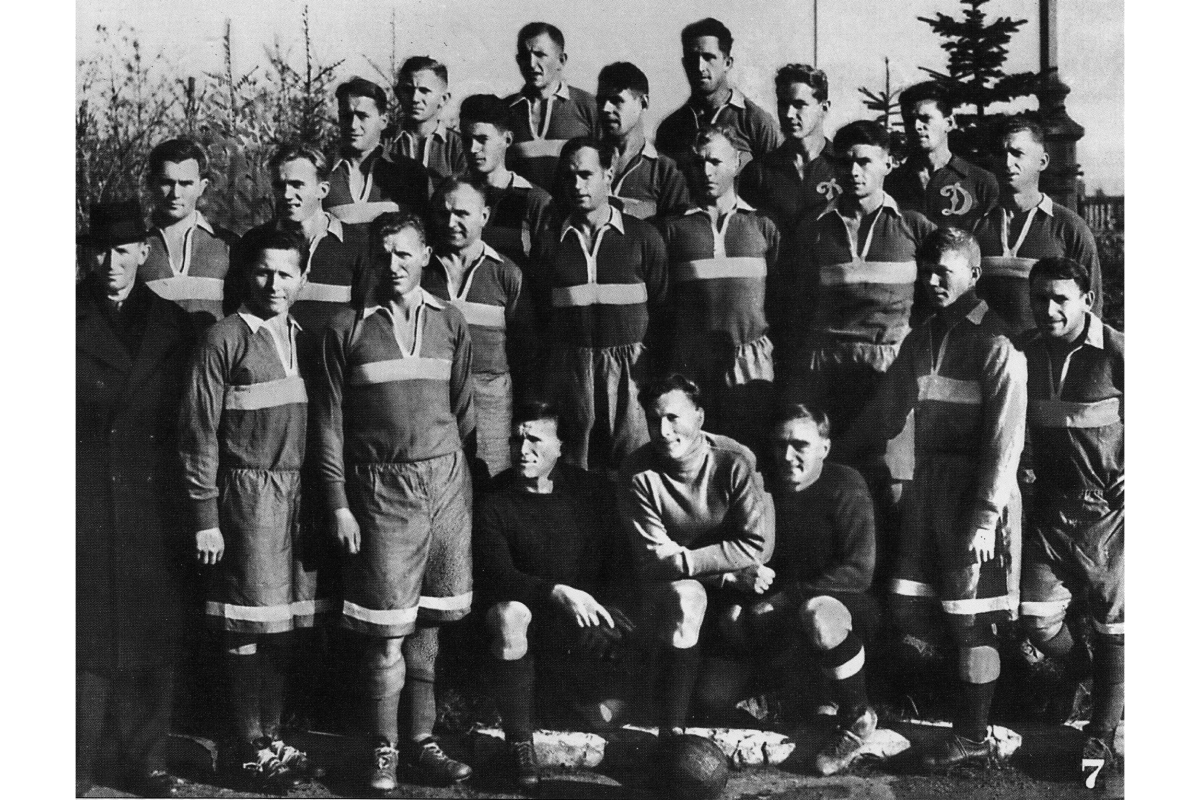
Given the importance of the upcoming matches, Dynamo's management decided to bolster their squad by inviting leading players from other football clubs. The White-and-Blues signed Vsevolod Bobrov (the USSR championship's top scorer with 24 goals) from CSKA Moscow, and Evgeny Arkhangelsky and Boris Oreshkin from Dynamo Leningrad. Early on the morning of November 4, two small planes departed Moscow for England carrying Dynamo players and an official delegation of 38 people.
The arrival of the Soviet footballers caused an unprecedented stir in the UK. 90,000 people attended the first match against Chelsea at Stamford Bridge. Everyone wanted to see what football was like in the USSR. Dynamo ultimately became the first Soviet team to play in England.
"We held several training sessions at London stadiums." "The grass surface and the general condition of the pitches at any stadium in England turned out to be excellent. Here I staged two-goal 'matches' between my teammates. These training games were very useful for us. Now I knew we were ready," recalled Dynamo head coach Mikhail Yakushin.
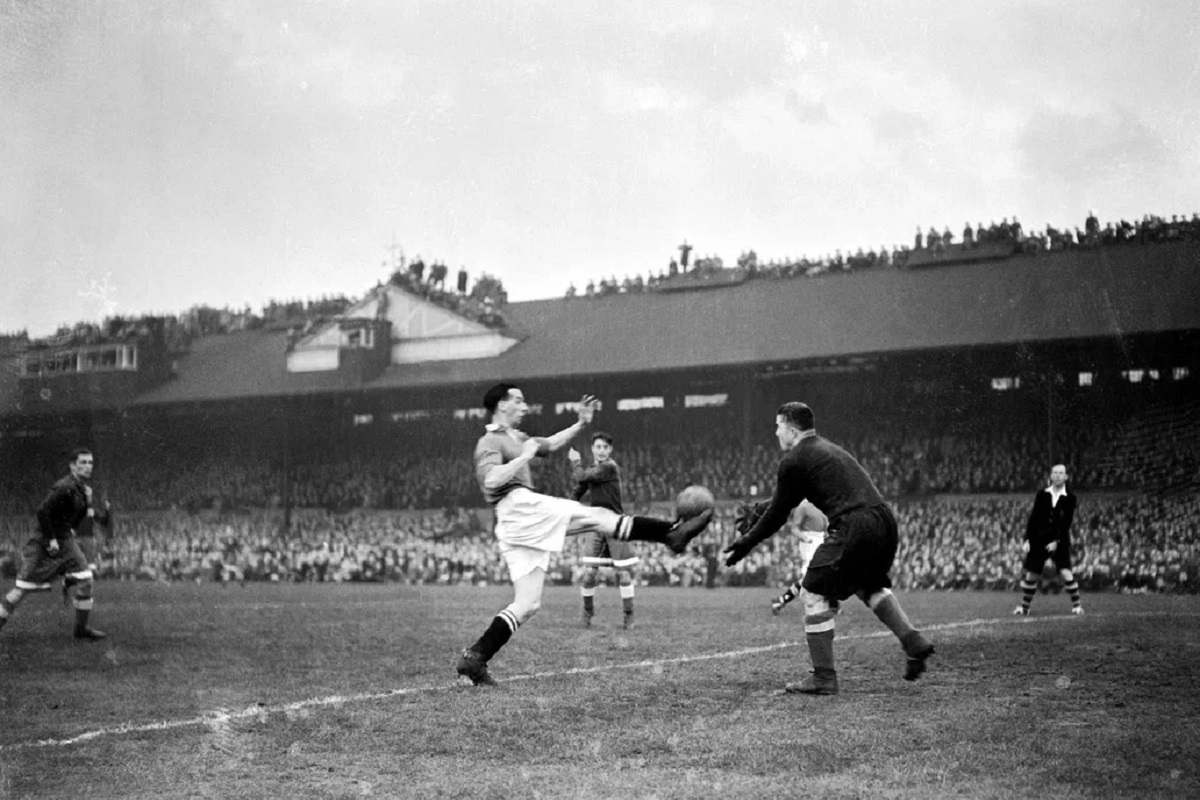
November 13, 1945. Dynamo – Chelsea – 3:3
London, Stamford Bridge
Referee: Clarke (London)
For the first match of the British tour, Mikhail Yakushin fielded the following lineup: Khomich, Radikorsky, Semichastny, Stankevich, L. Soloviev, Blinkov, Arkhangelsky, Kartsev, Beskov, Bobrov, and S. Soloviev. Chelsea started with Woodley, Tennant, Harris, Bacuzzi, Ressel, Foss, Dolding, Williams, Lawton, Gulden, and Bain.
Dynamo's first half was a bust. In the 23rd minute, Gulden received a pass from Lawton and shot past Khomich, opening the scoring. In the 30th minute, the Londoners doubled their lead when Stankevich's shot hit the foot of City striker Williams – 2-0. After the break, the blue-and-whites quickly pulled two goals back (Kartsev, who scored from 20 meters, and Arkhangelsky), but in the 77th minute, the English took the lead again, with a header from Lawton. Bobrov saved Dynamo from defeat, leveling the score in the 83rd minute. The day after the match, The Times of London ran an article headlined "Dynamo's Footballers Are First-Class Players."
"In the match against Chelsea, we were constantly playing catch-up except for the final six minutes. Chelsea were up 2-0 at the end of the first half! And then there was the fatal penalty that Leonid Solovyov missed! But this miss didn't break the Moscow team's fighting spirit." In the second half, they demonstrated what Soviet footballers are capable of, their inexhaustible will to win. Dynamo's achievement was all the greater because they came back from two goals down, which is extremely rare in international matches between top-class teams. While the first half was lost 0-2, the second was won 3-1," wrote Krasny Sport special correspondent Mikhail Tovarovsky from London.
"Technically, the English played excellently, but Dynamo managed to surpass them with tactical coherence, a fast pace, and greater stamina. Thus, despite some dire predictions, Dynamo won universal acclaim," noted Mikhail Yakushin.
"I am deeply convinced that if we had scored the first goal ten minutes earlier, the outcome of the match would have been different. After all, we had to fight not only with the opponent, but also with ourselves, and I don’t know which was more difficult,” said Vasily Kartsev, the scorer of Dynamo’s first goal, after the match.

November 17, 1945. Dynamo Moscow – Cardiff City – 10:1
Cardiff, Ninian Park Stadium
Referee: Davies (Cardiff)
For the match against Cardiff City, Yakushin fielded the same lineup as against Chelsea. Starting for the Welsh team were McLaughlin, Leaver, Stansfield, Raybould, Holliman, Lester, Moore, Kepsis, Gibson, Wood, and Clarke. Despite playing in the English third division, Cardiff Moscow was renowned for its tenacious, fast, and technical play. Moreover, the Ninian Park pitch was in perfect condition.
Dynamo Moscow took the initiative from the start and scored twice in the first ten minutes: Bobrov in the sixth minute and Beskov in the tenth. Arkhangelsky sealed the rout in the 25th minute, but that was only the beginning. After the first half, the scoreboard read 3-0 in favor of the Soviet team. Despite the white-and-blues' complete dominance, Yakushin lambasted Bobrov during the break, asking him to play for the team, not himself. Dynamo ultimately scored seven more goals in the second half (two each from Bobrov and Arkhangelsky, and three from Beskov), and the final score of 10-1 shocked the entire British football community. The following day, the British tabloid Daily Mail wrote: "No English club could have beaten Cardiff by such a score."
"The Cardiff players presented each of our players with miner's light bulbs. And I remembered the original gift that Welsh footballers sent to Moscow athletes two years ago, at the height of the war – a football bearing around 700 signatures from Welsh players… It's by no means true that Cardiff played poorly. On the contrary, at times it seemed to me that the Cardiff team outperformed Chelsea in terms of pace and attacking intensity. But Dynamo, playing with greater enthusiasm and confidence, proved stronger", wrote the newspaper Krasny Sport.
"The local team suffered a heavy defeat, 10-1. This made a strong impression on British sporting circles. The newspapers unanimously changed their tune and have already praised us as first-class footballers," Mikhail Yakushin described the match.
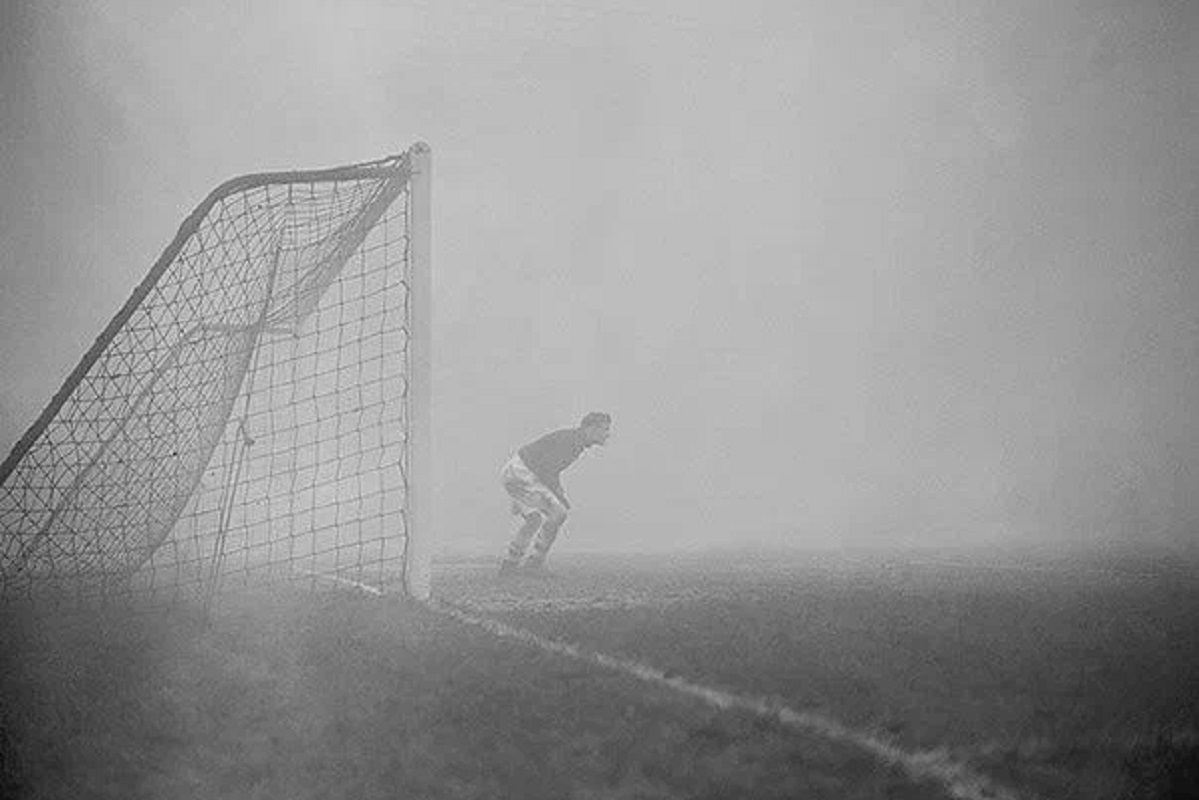
November 21, 1945. Arsenal – Dynamo Moscow – 3-4
London, White Hart Lane
Referee: Latyshev (Moscow)
Before the match, Arsenal, citing injuries, strengthened their squad with England internationals from other teams – Stanley Matthews (Stoke City), Stan Mortensen (Blackpool), and Harry Brown (Queens Park Rangers). Yakushin made one change to the starting lineup, fielding Trofimov in place of Arkhangelsky. Arsenal manager George Allison fielded the following players: Griffiths, Scott, Joy, Bacuzzi, Holton, Bastin, Matthews, Drury, Rooke, Mortensen, and Camner.
On the day of the match, there was thick fog in London, the temperature was around 4°C (39°F), and visibility was 40 meters (130 feet). The match began with the blue-and-whites attacking, opening the scoring in the first minute, with Bobrov scoring on a pass from Sergei Solovyov. However, the hosts quickly equalized, scoring in the 12th minute. The Londoners scored two more goals before the break, and in the 41st minute, Beskov reduced the deficit to 2-3. Shortly before the break, Leonid Solovyov suffered a serious injury and was replaced by Boris Oreshkin.
During the 15-minute break, an Arsenal representative entered the Dynamo dressing room and suggested suspending the match due to fog, but was refused. Almost immediately after the restart, Sergei Solovyov restored the tie, and Vsevolod Bobrov scored the winning goal in the 63rd minute. The Londoners eventually fought back, but the referee disallowed the goal due to a foul on Semichastny, causing discontent among the English team. They blamed the defeat on the fog and Soviet referee Latyshev, and after the match, they singled out three controversial incidents in which, in their opinion, the referee made serious errors.
"English football teams are the strongest in the world. It's all the more gratifying to realize that the Moscow Dynamo team managed to play successfully not only against the strengthened club teams of Chelsea and Cardiff, but also to win a crucial match against the English national team, which played under the flag of Arsenal Football Club," Komsomolskaya Pravda wrote the following day.
"The most difficult match for me was, of course, the match against Arsenal, or whatever hid behind that flag. I spent the entire 90 minutes in a state of tension I've never experienced before. The fog was so thick that I had no idea what was going on at the other goal. Only the applause and the roar of the crowd told me which way the ball was going... The English newspapers praised my performance, but I'm dissatisfied with it. Apart from the 'foggy match,' where anything was possible, at least half of the goals I scored in the other games could have been saved," Alexey Khomich shared his impressions.
"The game plan against Arsenal was built on a very energetic attack, on relentless, rapid attacks. Our forwards were supposed to outplay and wear down the Arsenal defense. I was certain that the Arsenal defense would be inferior to their forwards. My calculations were correct. We won the match 4-3," Mikhail Yakushin concluded.

November 28, 1945. Dynamo – Rangers – 2:2
Glasgow, Ibrox Stadium
Referee: Thompson (Glasgow)
Dynamo's lineup was the same as in previous matches, with the exception of the injured Leonid Soloviev, who was replaced by Oreshkin. The Scottish club's head coach, Bill Struth, started Dawson, Lindsay, Young, Shaw, Watkins, Simon, Waddell, Gillick, Smith, Ray, and Johnston.
In the third minute, Kartsev opened the scoring with a precise shot from the edge of the penalty area. Four minutes later, the referee awarded a penalty kick to Dynamo, but Khomich parried the shot, and it hit the post. In the 24th minute, Kartsev doubled the Blue-Whites' lead with a pass from Beskov, but the Scots, thanks to Smith, pulled one back before the break. In the 75th minute, the referee made a baffling decision: first, he awarded a free kick to Dynamo, but then, after consulting with his assistant, he reversed the decision and awarded a second penalty to Khomich. Young stepped up to the spot and converted the penalty. Despite Rangers' onslaught in the final minutes, the match ended in a draw.
"Football fever gripped everyone. Tickets were a hot commodity. Posters were posted around the city warning against buying counterfeit tickets. Many ships moored at the port on the Clyde Roads bore the words "Dynamo vs. Rangers" and immediately announced the expected score: 2-0, 3-0, and even 10-0 in favor of the Muscovites, - wrote a Komsomolskaya Pravda correspondent. - Dynamo team achieved great success in important international matches against the best professional football teams. The Muscovites scored 19 goals, conceding nine. The Soviet footballers withstood the difficult test with flying colors."
"In the match against Rangers, our defense had to work hard, as our attack was below its capabilities this time: fatigue took its toll. Furthermore, many of our players suffered serious injuries, and some had to be replaced with substitutes," Mikhail Yakushin summarized after the match.
"At the stadium in Glasgow, we continued to play using our tactics, which by the fourth match were already well-known in England. The Scots took this into account. The Rangers defenders didn't abandon us, guarding us very closely." But this time, after a period of "wandering," we suddenly launched an attack, adhering to the well-established "classic" routine. Sergei Solovyov advanced along the edge of the penalty area, passed the ball to Kartsev, who passed it to me, and I passed it back to Kartsev. Shot. Goal! Thus, our team, varying its attacking methods and adapting to the opponent's tactical ploys, achieved successful completions," recalled Konstantin Beskov.
Dynamo's British tour resulted in two wins and two draws, with a goal difference of 19:9. Four penalties were awarded in four matches: three against Dynamo (one scored, two saved by Khomich) and one against Chelsea (no goal). Of the 19 goals scored, six were scored by Bobrov, five by Beskov, four by Arkhangelsky, three by Kartsev, and one by Sergei Solovyov.
After 33 days in the UK, the Soviet delegation left London on December 7, 1945. The Dynamo players were given a ceremonial send-off in the English capital. British journalists demanded an immediate match between Dynamo and the England national team, but the English football authorities refrained from such a proposal. While waiting for flying weather, the blue-and-white players had the opportunity to stroll through the streets and parks of London and breathe in the autumn air: roses were still blooming in London, while in Moscow there were already severe frosts, snowfalls, and blizzards.
Dynamo's British tour not only raised the prestige of Soviet football but also had significant international consequences. Soon, the USSR officially became a member of the International Federation of Football Associations, and other Soviet clubs followed Dynamo's example: for example, in December of that same year, 1945, CDKA, Torpedo, and Dynamo Tbilisi played friendly matches in Yugoslavia, Bulgaria, and Romania. However, it was the Dynamo players who became pioneers, and their journey through Great Britain forever etched itself into the history of Soviet and world sport.